
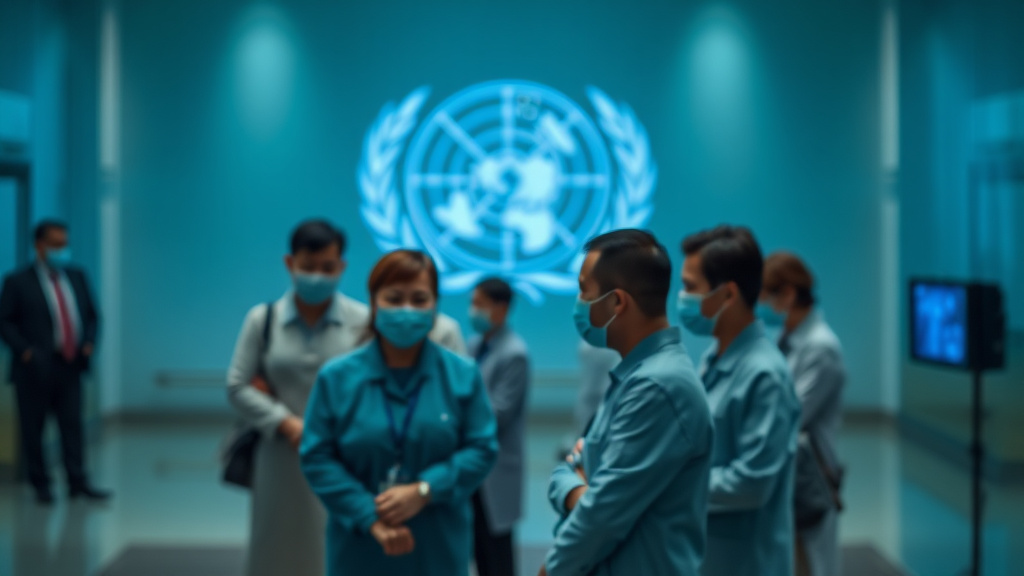
In a landmark move to address the increasing threat of infectious diseases globally, the World Health Organization has introduced an ambitious new initiative created to bolster international disease tracking and rapid response capacity. This extensive initiative aims to address significant shortcomings in outbreak readiness, enhance rapid identification mechanisms, and strengthen collaboration among nations. By bringing together resources and expertise, the WHO works to stop upcoming epidemics from developing into catastrophic worldwide health crises, conceivably protecting millions of lives.
Global Response Strategy
The WHO’s new initiative creates a integrated system that empowers nations to coordinate efforts in fighting communicable disease risks. By implementing consistent guidelines and communication channels, countries can transmit critical health information in real-time, facilitating rapid recognition of emerging pathogens. This coordinated method reinforces the worldwide disease prevention infrastructure, guaranteeing that funds are directed efficiently and strategically to contain outbreaks before they extend beyond frontiers and continents.
Central to this strategy is the development of regional coordination hubs featuring advanced diagnostic capabilities and skilled staff. These hubs will act as frontline defense mechanisms, offering rapid technical assistance and guidance to countries in need. The initiative emphasizes institutional strengthening in emerging economies, where resources are frequently constrained, securing equal availability to monitoring systems and emergency response capabilities. Through this inclusive model, the WHO aims to create a fully integrated international health infrastructure.
The initiative also focuses on investment in advanced technology and AI for disease monitoring. Machine learning algorithms will analyze vast datasets to predict disease spread patterns and identify potential hotspots ahead of disease spread. This proactive approach constitutes a paradigm shift from after-the-fact interventions to prevention-focused approaches. Enhanced surveillance systems will monitor viral changes and transmission patterns, enabling health authorities to refine actions rapidly and successfully.
Additionally, the WHO commits to building stronger relationships with commercial partners, educational organizations, and NGOs. This cooperative network fosters innovation in vaccine development, disease detection, and medical interventions. By eliminating divisions between public health authorities and research institutions, the initiative speeds up discoveries and guarantees quick implementation of solutions. Clear and honest information exchange increases public confidence and enhances public participation in disease prevention efforts.
Execution and Essential Parts
The WHO’s program works within a multi-layered structure combining technological innovation, international cooperation, and budget management. This planned methodology integrates established observation frameworks with advanced digital solutions, allowing immediate information exchange between nations. By establishing clear protocols and funding mechanisms, the organization guarantees member countries can implement extensive outbreak tracking networks. The initiative prioritizes vulnerable regions, reinforcing medical systems where epidemics present the highest threat to international stability.
Early Detection Methods
Sophisticated monitoring systems constitutes the backbone of the WHO’s early detection infrastructure. The initiative deploys AI and machine learning models to analyze health data trends, detecting emerging disease spread before they spread widely. Testing facilities across participating nations receive enhanced tools and training to enhance testing precision. This integrated network facilitates rapid identification of new infectious agents, allowing public health officials to implement containment measures promptly and effectively.
The early detection framework also prioritizes local participation and regional notification systems. Healthcare workers in remote areas are trained to identify unusual disease patterns and report findings through secure digital channels. The WHO provides real-time feedback and recommendations to frontline personnel, building a responsive ecosystem. This grassroots approach ensures outbreaks are identified at their source, optimizing treatment impact and limiting disease transmission.
Immediate Response Groups
Specialized rapid response teams are prepared to mobilize within 48 hours of outbreak verification. These integrated units include epidemiologists, diagnostic specialists, logisticians, and communications professionals. Teams complete comprehensive training in outbreak investigation, sample gathering, and applied epidemiology. The WHO maintains advance equipment stockpiles and supplies in priority regions worldwide, ensuring teams can immediately address evolving health threats with reduced lag time.
Response teams coordinate effectively with national health authorities and community groups, honoring cultural considerations while putting in place essential control strategies. Training emphasizes transparency and public communication to maintain trust during critical situations. The initiative provides psychological assistance for team members operating in dangerous settings. Continuous evaluation and feedback discussions enhance operational standards, making certain each response produces important insights for future operations.
- Send epidemiologists within forty-eight hours internationally
- Perform field investigations and specimen collection procedures
- Liaise with local health authorities and governments
- Offer real-time data analysis and disease surveillance
- Implement control strategies and prevention protocols
Expected Outcomes and Long-term Effects
The WHO’s program is expected to deliver far-reaching results in the coming five years. Enhanced surveillance systems will enable earlier detection of novel disease-causing organisms, reducing response times significantly. Countries implementing these protocols can expect enhanced disease surveillance capacity and laboratories with improved resources. The initiative is designed to implement uniform reporting systems across all participating nations, creating a integrated international framework. Preliminary estimates suggest that quick-response procedures could prevent up to 80% of possible disease outbreaks from becoming pandemics, substantially transforming how the world responds to infectious disease threats.
Looking ahead, this initiative promises to establish a fresh benchmark for worldwide health collaboration and preparedness. By channeling funds into infrastructure, training, and technology transfer, the WHO foresees a future where communicable illnesses are quickly contained at their source. Member nations will gain access to pooled research information, aligned vaccination initiatives, and robust health infrastructure. The sustained effects extends beyond controlling illness spread to creating adaptable health frameworks capable of withstanding future biological challenges, ultimately fostering a more secure global environment for all populations and generations to come.
